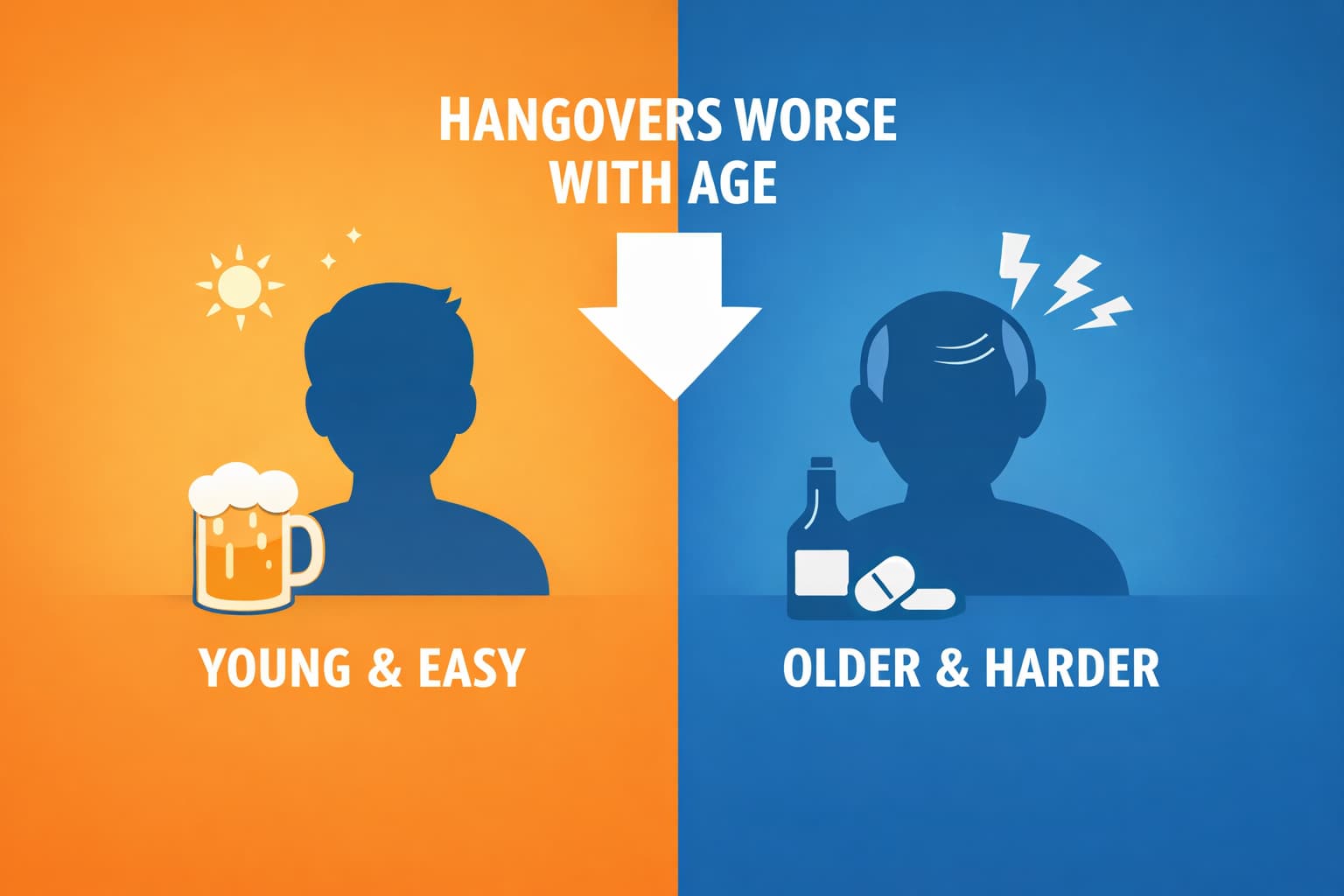
Hangovers in your early twenties were often a minor inconvenience. A coffee, a shower, maybe a greasy breakfast—and you were back in the game. Fast forward ten or twenty years, and the same amount of alcohol can derail an entire day. Headaches last longer, concentration drops, sleep feels useless, and recovery takes far more effort. This is not imagination or bad luck. There are clear biological and lifestyle reasons why hangovers get worse with age.
Alcohol Metabolism Slows Down Over Time
Your body processes alcohol primarily through the liver, using enzymes such as alcohol dehydrogenase (ADH) and aldehyde dehydrogenase (ALDH). As you age, the efficiency of these enzymes declines. This means alcohol and its toxic byproduct, acetaldehyde, remain in your system longer.
Slower metabolism leads to higher and more prolonged blood alcohol levels, even if you drink the same amount as before. The longer toxins circulate, the more intense and persistent hangover symptoms become, including nausea, headaches, and fatigue.
Dehydration Hits Harder After 30
Alcohol is a diuretic, causing increased urine production and fluid loss. Younger bodies tend to compensate more efficiently by retaining water and restoring balance quickly. With age, overall water content in the body decreases, making dehydration more severe.
Dehydration directly contributes to headaches, dizziness, dry mouth, and muscle weakness. When combined with alcohol’s electrolyte-disrupting effects, recovery takes longer and feels more uncomfortable than it used to.
Sleep Quality Declines After Drinking
Alcohol may help you fall asleep faster, but it disrupts sleep architecture, especially REM sleep. As people age, baseline sleep quality already declines due to hormonal changes and altered circadian rhythms. Adding alcohol to the mix amplifies the damage.
Alcohol and REM Sleep Suppression
REM sleep is essential for mental recovery, mood regulation, and cognitive performance. Alcohol suppresses REM cycles, leading to fragmented, shallow sleep. Older adults experience a stronger rebound effect, waking up frequently and feeling unrested even after a full night in bed.
Increased Sensitivity of the Nervous System
With age, the nervous system becomes more sensitive to chemical stressors. Alcohol affects neurotransmitters such as GABA, glutamate, and dopamine, which regulate mood, focus, and anxiety. Older brains react more strongly to these disruptions.
This explains why hangovers often come with heightened anxiety, irritability, and brain fog later in life. The same drinking session that once felt “fun” can now trigger a day of mental discomfort.
Inflammation and Immune Response Play a Bigger Role
Alcohol causes systemic inflammation. As you get older, the immune system tends to stay in a low-grade inflammatory state, sometimes called “inflammaging.” Alcohol intensifies this response, making hangover symptoms more pronounced.
Why Inflammation Makes Hangovers Worse
Inflammation affects blood vessels, the digestive system, and the brain. This leads to:
- stronger headaches due to vascular inflammation
- stomach irritation and nausea
- slower physical recovery and fatigue
Because the body’s ability to resolve inflammation weakens with age, these symptoms linger longer.
Medications and Health Factors Add to the Problem
Many adults over 30 or 40 take medications that interact negatively with alcohol. Painkillers, sleep aids, antidepressants, and blood pressure drugs can all intensify hangover effects or increase toxicity.
In addition, age-related changes in liver, kidney, and gut function reduce the body’s resilience. Even mild health issues can significantly worsen hangovers when combined with alcohol.
Lifestyle Changes Amplify Hangover Severity
Hangovers are not just about biology. Lifestyle shifts also matter. Older adults often drink later at night, sleep less, and have more responsibilities the next day. Stress, lack of exercise, and poor nutrition all reduce recovery capacity.
In casino and sports betting environments, alcohol consumption often coincides with long nights, emotional highs and lows, and screen exposure. This combination further strains the nervous system and worsens next-day symptoms.
One common mistake is drinking on an empty stomach during late-night games or betting sessions. This accelerates alcohol absorption and increases peak blood alcohol levels, leading to harsher hangovers.
Can You Reduce Hangovers as You Age?
You cannot fully reverse the effects of aging, but you can reduce their impact. The most effective strategies are rooted in physiology, not myths.
- eat a balanced meal with protein and fats before drinking
- hydrate before, during, and after alcohol consumption
- prioritize sleep length and quality
- limit mixing alcohol types and sugary drinks
Moderation becomes more important with age—not because tolerance disappears, but because recovery systems slow down.
The Bottom Line
Hangovers get worse as you get older due to slower alcohol metabolism, increased dehydration, disrupted sleep, heightened inflammation, and greater nervous system sensitivity. Lifestyle factors and medication use further intensify the effects. Understanding these mechanisms helps explain why recovery now takes longer—and why smarter drinking habits matter more than ever, especially in environments where alcohol is part of entertainment and nightlife culture.